

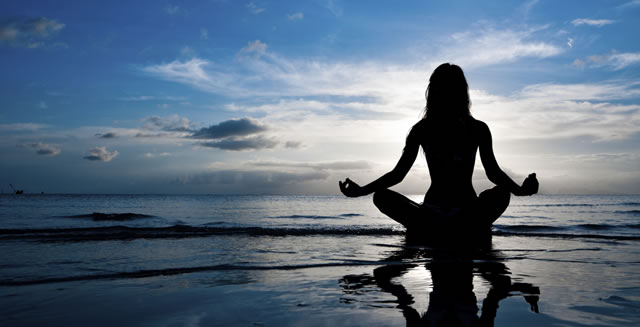
Sri Lanka Yoga
Yoga is a family of ancient Hindu spiritual practices that originated in India, introduced to Sri Lanka centuries ago Yoga in Sri Lanka remains a vibrant living tradition and is seen as a means to enlightenment. Karma Yoga, Bhakti Yoga, Jnana Yoga, and Raja Yoga are considered the four main yogas, but there are many other types. In other parts of the world where yoga is popular, notably the West, Yoga has become associated with the asanas (postures) of Hatha Yoga, which are popular as fitness exercises.
We offer Yoga lessons and classes in various locations in Sri Lanka. All conducted by experienced, well-known Yoga teachers.
For more information click here...
Bhakti Yoga
Bhakti yoga is the Hindu term for the spiritual practice of fostering of loving devotion to God, called bhakti. Traditionally there are 9 forms of bhakti yoga. Hindu movements in which bhakti yoga is the main practice are called bhakti movements. Bhakti yoga is generally considered the easiest of the four general paths to liberation, or moksha (the others being Karma, Raja and Jnana Yoga). In scriptures such as the Bhagavata Purana, bhakti is described as a perfectional stage in itself which surpasses even moksha as a level of spiritual realization.
Bhakti is the Sanskrit term that signifies a blissful, selfless and overwhelming love of God as the beloved Father, Mother, Child, Friend or whichever relationship or personal aspect of God that finds appeal in the devotee's heart. Bhakti incorporates a number of universal principles, also common in other world religions.
Jnana Yoga
Jnana in Sanskrit means "knowledge", and is often interpreted to mean "knowledge of the true self". In the Vedanta school of the Hindu religion, to know Brahman as one's own Self is jnana. To say, based on experience "I am Brahman, the pure, all-pervading Consciousness, the non-enjoyer, non-doer and silent witness," is jnana. To behold the one Self everywhere is jnana.
One of the philosophical fundamental pillars of Jnana yoga is nondualism which is a fundamental belief in the unity of the universe, especially of the individual soul atman with brahman or transcendent, all pervasive ultimate reality. This is expressed in Hindu philosophical school of Advaita Vedanta. The desire for liberation mentioned above might be described as "wanting to be one with the universe."
Karma Yoga
Karma Yoga, or the "discipline of action" is based on the teachings of the Bhagavad Gita, a holy scripture of Hinduism. One of the four pillars of yoga, Karma yoga focuses on the adherence to duty (dharma) while remaining detached from the reward. It states that one can attain Moksha (salvation) by doing his duties in an unselfish manner.
Per Hinduism, the gist of mundane life centers on Karma. It is believed that a man is born with certain Sanskars, his past pushes him towards doing certain Karma and these Karmas are then deposited in his virtual account. The process continues until the individual attains a zero balance, wherein one achieves liberation from the cycle of rebirth.
Following the practice of Karma yoga, an individual can potentially become a true spiritual seeker and realize his true nature as Atman. He can live in & work for this world but still remain untouched by the grossness of mundane pleasures.
Raja Yoga
Raja Yoga involves psycho-physical meditational techniques which attain experiences of the truth and finally achieve liberation. Raja yoga is also known as Ashtanga Yoga. The term Ashtanga means eight limbs, thus Ashtanga Yoga refers to the eight limbs of yoga.
The eight limbs of Raja Yoga are:
Yama: Code of conduct - self-restraint
Niyama - religious observances
Asana - integration of mind and body through physical activity
Pranayama - regulation of breath leading to integration of mind and body
Pratyahara - abstraction of the senses
Dharana - concentration, one-pointedness of mind
Dhyana - meditation (quiet activity that leads to samadhi)
samadhi - the quiet state of blissful awareness, superconscious state.
for Sri Lanka Yoga Packages click here
To look for selected Sri Lanka hotels or guesthouses click here...
For more travel and background information on Sri Lanka, read our Sri Lanka Guide and the travel tips, helping you to make the most out of your holiday in Sri Lanka.