

Sri Lanka
Dances
The ritualistic dances of Sri Lanka have attained world fame for their weird mystical beauty. Heavily influenced by India, Sri Lanka's Kandyan dance and kōlam plays have South Indian origins. But over the centuries these have been transformed and now have a distinctly Sri Lankan character.
There are several different types of traditional dance. These include Kandyan dances, Sabaragamuwa dances, low-country dances, devil dances, and several others. Kandyan dances are probably the most important of the various Sri Lankan traditional dances. It is generally regarded as the national dance form. Kandyan dances evolved in the Kandy Kingdom. This was the kingdom in the interior of Sri Lanka that proved most resilient against the Europeans. Many of the dances depict stories associated with the Kandy kings, queens, princes and heroes.
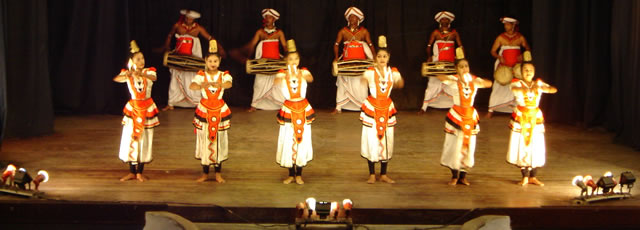
The dance style probably is a good representation of dances in Kandy. Kandy costumes can be very impressive. Male dance costumes can include spectacular headwear. Bare chests are decorated with intricate silver regalia. There are also silver bangles on arms and anklets. The dances are set to drum rhythms. The dance itself is highly ritualistic. In devil dances, the dances are performed by the artists who wear different kind of masks and it also used as a treatment for diseases caused by “Unseen Hands”. Many of these dances are performed in solo and also group performances.
Kandyan Dance
This dance form flourished under the Kandyan kings and is today considered the national dance of Sri Lanka.
There are four types: pantheru, naiyaki, udekki and ves.
The famous Indian epic Ramayanahas provided plenty of material for the dances, especially Rama's dash to Lanka to save Sita.
The best-known costume of male Kandyan dancers is a wide skirt-like garment. The dancer's bare chest is covered with necklaces of silver and ivory, and bangles of beaten silver are worn on the arm.
The dancers are accompanied by drummers who beat out complex rhythms on the geta bera, a Kandyan tapering double-ended drum.
Devil Dance
Traditionally, devil dancing is performed to free a person or place from demons, evil spirits or just plain bad luck caused by malignant spirits.
The devil dancers themselves belong to a low-caste community and specialize in this art form.
It is difficult to divide Sri Lankan performing arts into dance and drama, because a kōlam play uses dance and song, and the devil dance has bits of improvised prose dialogue.
To look for selected Sri Lanka hotels or guesthouses click here...
For more travel and background information on Sri Lanka, read our Sri Lanka Guide and the travel tips, helping you to make the most out of your holiday in Sri Lanka.